

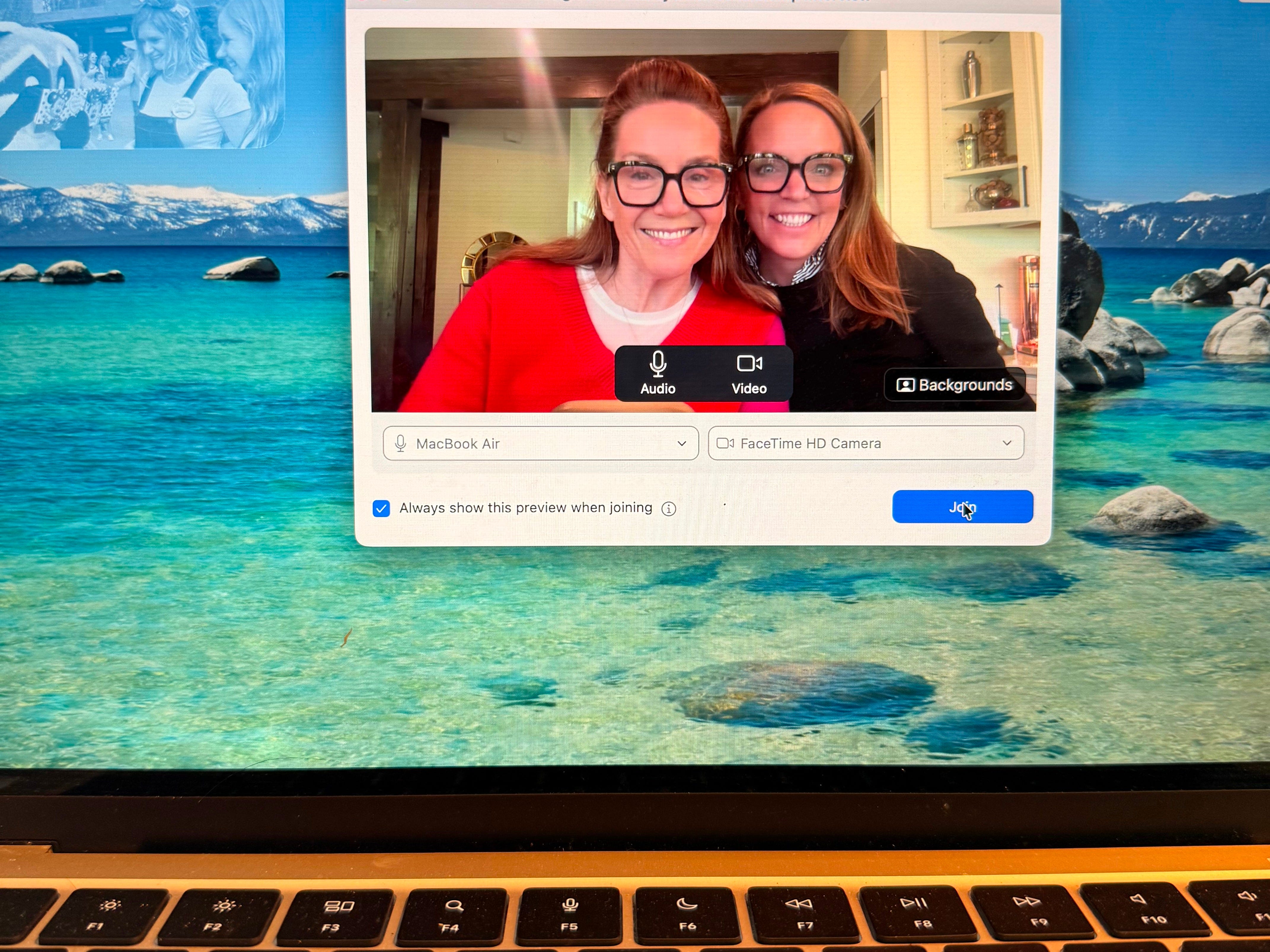
Every March and April, I look forward to one of my favorite rituals: interviewing high school seniors for scholarship consideration. For the past twelve years, I’ve had the privilege of sitting on our local community foundation’s selection committee — and every year, without fail, these young people leave myself and my partner Andrea and the rest of the committee genuinely awestruck.
The sheer volume of what they carry is staggering. Academics, athletics, clubs, student government, music, theater, community service — often while holding down part-time jobs. Many walk in visibly nervous, and we make a point of slowing down at the start:
Breathe, you’re safe here, you’ve earned your place at this table.
Once they settle in, something remarkable happens.
We ask a mix of questions — some they’ve clearly rehearsed, some designed to catch them off guard. (“Is a hot dog a sandwich?” is a perennial favorite, especially with the engineering students.) But the question I treasure most is this one: What book, film, or piece of music has genuinely influenced you?
You can see the moment they decide to tell the truth instead of the answer they think we want. Their eyes change. They sit forward. One student this year paused and asked, almost conspiratorially — “Is it okay if it’s a weird answer?” Yes. Always yes. That’s exactly the answer we want.
“Leadership doesn’t mean bossing people around — it means inviting people in to showcase their best skills.”
This year, 100 students came before the committee. One hundred, across different schools, backgrounds, and ambitions. And when we asked each of them to describe their leadership style, something quietly extraordinary happened: every single one gave some version of the same answer.
Collaborative. Inclusive. Built on listening. I could do it all myself — but leading has taught me to lean into other people’s ideas, many of which are better than my own. Over a decade of interviewing students, I’ve watched this shift happen gradually and then all at once. Their answers are less performative, more honest. More human.
These are not answers they memorized from a leadership textbook. These are things they learned by actually leading — by navigating the conflicts, the fundraising drives, the resistant teammates, the moments when the obvious path forward required someone else’s courage to name it.
The world is starting to catch up
It turns out the boardroom is arriving at the same conclusion — just a few decades later.
In a recent Fortune interview, JPMorgan Chase CEO Jamie Dimon urged young workers to prioritize emotional intelligence as AI reshapes the workforce. Dimon told CBS that developing EQ — the ability to communicate, build trust, and connect with people — remains essential, describing it as: “Can I communicate? Do I have heart? Do people trust me?” He argued that the fundamentally human skills of curiosity, collaboration, and purpose are what will define success in an AI-driven world. Those 100 students in the room with me could have written his remarks themselves.
Source: Fortune — “JPMorgan CEO Jamie Dimon predicts AI will cut the workweek down to 3.5 days — and tells Gen Z developing EQ is more important than ever” (April 2026)
The trap that experience can set
Here’s what I keep thinking about: the leaders these students are describing — curious, collaborative, genuinely open to being wrong — are the same leaders that the most seasoned executives I know are actively trying to become.
High intelligence is an extraordinary asset. It’s also one of the most effective defenses against self-awareness.
Here’s the pattern I’ve seen repeatedly in senior leaders: a brilliant person encounters feedback that’s uncomfortable. In less than a second — faster than conscious thought — their mind constructs a case for why the feedback is wrong. Or incomplete. Or coming from someone who doesn’t have the full picture. The argument is airtight. Logical. Often correct on some level.
And it completely protects them from the one thing that would actually move them forward: sitting with the discomfort long enough to find what’s true in it.
This isn’t a character flaw. It’s a feature of a well-trained mind. Intelligent people are pattern-matching machines, built to solve problems quickly and build arguments fast. The problem is that self-awareness requires the opposite — slowing down, tolerating ambiguity, staying in question longer than feels comfortable.
I call it the Intelligence Trap.
“The most rigorous thing a high-performing leader can do is turn that same analytical precision inward.”
The leaders who break out of it aren’t less smart. They’re the ones who get curious about their own defenses — who notice the moment their mind pivots to counter-argument, and pause to ask: what am I protecting here?
That single question has done more for the executives I work with than any strategy session ever has.
The students already know this
What strikes me most about the 100 seniors w
e interview each year is that they arrived at these insights not through theory, but through experience. They learned to listen by leading groups that ignored them when they didn’t. They learned to invite other voices because they ran out of their own answers. They got humble the real way — by being wrong in front of people who were counting on them.
Conscious leadership isn’t gentle work. It’s exacting. It asks you to apply the same rigor to your inner world that you bring to your spreadsheets, your strategy decks, your quarterly reviews. To notice your defenses. To stay curious even — especially — when your instinct is to argue.
Those 100 seniors haven’t had decades to build up armor. They’re still close enough to not-knowing that they wear it naturally. The invitation, for those of us further along in our careers, is to find our way back to it.
They’re not waiting for us to teach them what leadership looks like. In a lot of ways, they’re already showing us.
One question to sit with:
What’s one belief about yourself as a leader that you’ve never seriously questioned? Drop it in the comments — I read every one.